Monday, January 06, 2014

LOST Rewatch: Pilot, Tabula Rasa, Walkabout, White Rabbit

Credit:tle1lost.wordpress.com
It's something that I've thought about doing . . . pretty much since LOST left the air back in, um, was it 2010? Really? But I never got around to it and certainly other shows grabbed my interest and I think I just needed to let the show sit and let my memories of it fade a bit so that I wasn't simply reliving things that I already knew pretty well.

So, when Grace approached me this weekend and asked if we could start watching LOST together, well . . . you didn't need to ask ME twice. Who loves LOST more than me? Who has never completely bowed in the face of the criticism that the show felt after the final episode aired. Who needed a thematic reason to blog more in 2014? And, putting it all together . . . who BETTER than I?

Frankly, LOST and blogging are historically intertwined. Much of my earliest posts here on WWYG and on the now fallow WWYG: Omnimedia were centered around LOST, the development of the show, my coworkers discussion of it, and much, much more. I look forward to reliving it, especially with Grace--with whom I am always casting about for something that we can share together.

We blitzed our way through the two hour pilot and the next three episodes this weekend. I am trying to put a curb on my excitement and limit the viewing to one per day. (That'll also help me space out my blogging thoughts a bit so that they can be a.) more comprehensible and b.) more careful and detailed. But since I'm starting by playing catchup, I'll try to give some overall thoughts on this first handful in this initial post.)

And, I'll most likely be throwing up at-the-minute impressions over on my Twitter feed. So, you could follow me there and look for the #LOST hashtag.

Pilot: It felt really, really good to watch this show again. Even though I know so much about the show and what is to come, the reintroduction to the characters when all was new and fresh (for them) is great. And to see Grace's reaction to these characters, to watch her growing amazement as flashbacks begin, as names are introduced, as the motley crew of Flight 815 is examined . . . that is just priceless. I've got to work hard to not give anything away, to not feed Grace the information that she so badly wants. I need to remember that the slow reveal is the best part of the show, that experiencing the mystery and puzzling it out was so much fun for me.

And I find that I really enjoy hearing the characters say things that were completely innocent phrases in 2004 but are so fraught with meaning now. (Such as, did you realize that the very first words that Michael ever said as the plane fuselage burned on the beach was, "Waaaaalt!" I kid you not.)

And while I know the tortured history of how the narrative of the show developed, I see where--in their final hours--Lindelof and Cuse tried to tie up things in the seasons 5 and 6 endgame.


Tabula Rasa: Get to know Kate and think about what she did. The structure of the first season is established with a character being examined through pre-crash flashbacks. Our early introductions into the surly, crass version of Sawyer that is now so hard to remember given how far his character changed over time. This episode shows Kate's propensity to keep moving, hold her secrets close, and never ever trust anyone.

The idea of redemption and moving on from the past is shown here. How much the show would rely on that, we then had no idea. Plus, there were these prophetic words that ring so strongly now.

Walkabout: One of the iconic episodes of the most iconic LOST season. This Locke-centric episode pulled back the curtain behind the mysterious man who had all the knives. During the flashback I was reminded of how much a jerk Locke's boss "Randy" was. And, of course, the first "Holy shit!" reveal of Season 1 happened in the final moments of this episode.

John Locke would come to mean so much to the show as the seasons piled on. And it's hard to separate out the man we are getting to know in the opening hours to who he would later become. But there isn't much better to remember him by than this.

White Rabbit: Jack finally gets an episode to himself and it introduces the Shephard father-son relationship for the first time. And, even after the big reveal at the end of Walkabout, this--more than any of the first few episodes--gives you the thought that something really strange is going on here on this island. Locke says as much during his jungle talk with an exhausted and bewildered Jack, telling Jack that he has "seen the heart of the Island . . . and it is beautiful." There will be many more Jack/Locke talks to come, but this one first brings into question the nature of where they are--much more so that Charlie's iconic question in the Pilot:

Credit: abc.com


And then, at the end, Jack takes on the leadership role after finding his father's empty coffin in the water caves. But while doing so, he gives his first Rousing Speech, uttering the immortal LOST words: "If we don't live together . . . we're going to die alone."

Lovely, lovely memories.

Sunday, January 05, 2014

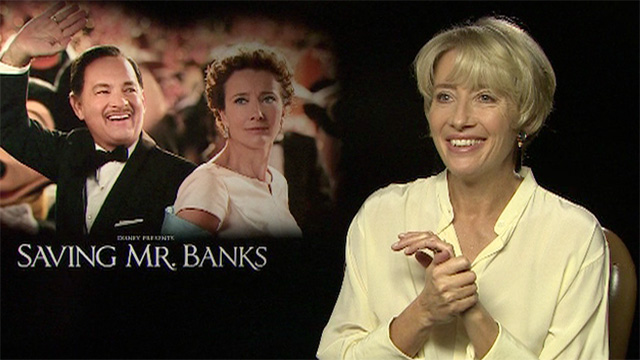
Movie Review: "Saving Mr. Banks"

Credit: theguardian.com
This is the time of year when we have theater gift cards burning holes in our pockets, a bit of extra free time, and award-quality movies out there for our consideration. And so, Lynda and I went to see Saving Mr. Banks last night.

Short, pithy review: It was good. It was sadder than I expected. Emma Thompson was the best part of the movie--which is good as she was very much the center of it.

More detailed movie thoughts: I've seen Mary Poppins (the Disney movie) many times, because of kids and I like it and I can recite many of the songs, and I always forget how looong it actually is. As far as early-era Disney movies go, its enjoyable and I like it. Bonus points because Julie Andrews is super great and the bit with Uncle Albert is odd and fun and I was always intrigued by how Mary Poppins became very shrewish with the kids after their jolly holiday in the chalk drawings and they are going to bed and carrying on about what a great day they had. (It always seem very off tone . . . but after watching SMB, it makes a bit more sense.)

Saving Mr. Banks is about the making of Mary Poppins and tells the (mostly true?) story of how Walt Disney and his creative team work with, against, and around Poppins author P.L. Travers to get the movie made in the early 1960s.

Tom Hanks is a passable Walt Disney, but as with all of his roles, I always know that it is Tom Hanks. (But, to be honest . . . unless extensive makeup is used, isn't that really always the case with actors? Isn't the "s/he submerged themselves in the role" something that Hollywood tells us and expects us to accept?) I don't know if someone else would have been a better Walt. They probably wouldn't have carried with them the likability factor of Hanks that was important for portraying the steward of the Happiest Place on Earth.

And here is where my biggest questions for this movie lay. I don't know a detailed biography of Walt Disney, but I know he's a huge target for supporters and for detractors alike. So, when someone that mythologized/demonized is shown . . . how much is real and how much is massaged? Watching this movie makes me want to read more about Disney . . . similar to the excellent biography of Charles Schultz that I got for Christmas several years ago. But can such an honest telling of Disney be possible anymore? Is the cult of personality too strong and too carefully built?

Back to the movie . . .

Emma Thompson, of Poppins-spin off Nanny McPhee (and others, of course) fame is great. She plays the prickly, cautions, conflicted P.L. Travers with clarity and believability. She is the center of the film's story and much of the narrative bounces back and forth between Travers' time working on the Poppins script in Los Angeles in 1961 and her memories of an Australia childhood in the early 1900s.

But here again, I am not sure if the directly-suggested links and phrases from Travers' memories that echo moments in the Disney film are real or invented to tell a Hollywood story. Perhaps I need to read more about her life as well and also to read the series of Poppins books (who knew there were more than one?).

Overall, it was a sad tale that choked me up at moments, made me laugh at all the expected times, and made me see an old familiar tale in a new way. And that is surely what it was meant to do. So, high praise for making a human story the way they wanted and doing it well.

Miscellaneous:
  • Surely Paul Giamatti's driver character is one of those Hollywood inventions that helps link a story together. He wasn't real, was he?
  • My biggest narrative beef was that the movie didn't do a clear enough job explaining to me why Travers' heart of ice began to thaw. The movie showes it happening, but never quite made me understand why she acquiesced on the progress of the script or why she (supposedly) began liking her time in L.A.
  • Kudos to Jason Schwartman for his role as the piano-playing, singing lyricist (one of the Disney Studio's Sherman brothers). He was very enjoyable.

Thursday, January 02, 2014

Movie Review: The Hobbit (The Desolation of Smaug)


We all know already that this Hobbit movie series expands upon the simple childhood tale that we might or might not have read as a child. Those disagreements and criticisms were made last year when TH: An Unexpected Journey was released and reviewed. You either liked it or you didn't. You either washed your hands of Peter Jackson and said "No more, man. I'm not gonna watch your movies anymore." Or . . . you didn't.

Me? I'm in the camp of knowing what he did and deciding to be fine with it. I mean, what am I gonna do? Go make a movie of my own? Go watch the Richard Bashki animations again? I know that this movie is made by the Peter Jackson that made King Kong rather than the Peter Jackson that made LotR: The Fellowship of the Rings. This Peter Jackson has a guaranteed fan-base (me included) that is gonna do what he's gonna do. You're going to have to be okay with his artistic license and his story manipulation, because he brought the Lord of the Rings to life in a faithful adaptation that no one else thought was possible. He did it and he made gazillions and he won Academy Awards and you're just going to have to be okay with that.

So, what was The Hobbit: TDoS really like?

It was a more coherent story than TH: AUJ. It somehow felt more like a movie and less like a video game. But maybe that was the lack of dwarf songs and circus-dancing dish cleaning? Instead, this was a journey movie, tracking Thorin's company through the perils of Mirkwood, the local politics of Laketown, and right into the heart of the Lonely Mountain to Smaug himself.

There was also lots of diversionary, appendix-based investigations by Gandalf and Radagast into the true nature of the Necromancer. (These scenes were the biggest diversion from the original story--leaving aside the very existence of Evangeline Lilly's Tauriel . . . and her unexpected love interest with Kili the dwarf?) Most of this I really didn't mind. Legolas and Tauriel's rubber-boned attacks on hapless orcs resulted in lots of visual interest and provided a spark to the movie that was lots of walking and talking otherwise.

[Also . . . is it killing Hollywood to allow Orlando Bloom to get the girl? What am I missing here? He's asexual as Legolas in the first LotR movies, so I guess no harm there. But in each of the Pirates of the Caribbean movies he's gotta move heaven and earth to convince Keira Knightly to love him. And didn't he play Paris in the mid-2000s big budget Troy movie that flopped? So, he failed to win over Helen in that movie, launching a war over his romantic ineptitude? Seriously everyone, why all the lady hate for Orlando B?]

[And as I now think of it, anything, and I mean ANYTHING, is better than the disaster that was the Goblin King mess of TH: AUJ. I mean, that nonsense was just awful.]

The most problematic part of the TH: TDoS was at the end, when Thorin and (part of?) his Company decided to accompany Bilbo into the Lonely Mountain and proceed to lead a hair brained attack on Goldenbelly Smaugerbatch. This led to lots of Attack of the Clones droid factoryesque fighting that had no place anywhere and should not even have been attempted.

But, overall, it was a more engaging movie than TH: AUJ and may be the strongest in the trilogy, considering that most of what is left in TH: Battle of the Five Armies (or whatever subtitle they choose to give it) is going to most closely hew to the battle scene sections of The Two Towers. So, if you watched TTT and said to yourself, "You know . . . the Battle of Helm's Deep should have been an hour longer" then this next movie is probably for you. But if you wanted more idyllic stuff similar to The Fellowship of the Ring, I'm guessing this third installment might be disappointing to you.

But, what do I know?

Miscellaneous
  • I thought the molten golden statue of Thror that was crafted in the fight against Smaug was ridiculous and very deux ex machina. But Brandon from work suggested that the mold was shown in the TH: AUJ scenes when Smaug first attacked Erebor. Maybe he's right. I haven't rewatched that movie.
  • Did you blink and miss the cameo from Peter Jackson . . . but most importantly (noted Tolkien nerd) Stephen Colbert?
  • We didn't stay to see if there was an extra scene at the end of the credits. Does anyone know?
  • What was up with the Thranduil zombie face reveal when he was talking about dragon fire? Even stranger than Galadriel's Ring-based freakout in LotR: TFotR.
  • Speaking of Thranduil . . . did you know he was portrayed by Lee Pace--formerly of ABC's Pushing Daisies TV show? If you didn't see his name in the credits, his eyebrows should have given him away.
  • Also . . . I reject the decision to augment Benedict Cumberbatch's voice. Sure, you can put an echo on it since Smaug was in a cavernous space . . . but why do more than that?
What did you think? Like or not like? Let me know in comments.

Wednesday, January 01, 2014

2013 +1

Credit: globalgiving.org
"They"say that what you do on New Year's Day represents what you will do all of this coming year. And so we'll see what I spend my time doing today, though I suspect that too much of it will be thinking about office work I'm not doing enough of (surely a safe bet for the dominant theme of 2014).

But it is also time for Resolutions that might not even last a week. And, since I am stunningly average in most ways, some of my goals for 2014 are what you might expect.

  1. I hope to worry about work less and at the same time, do my job with a cheerful attitude.
  2. I should work to lose a bit of weight and find some better ways to exercise this winter.
  3. I also want to blog more often--a refrain often heard on this site in recent years. But I'll try not to set unreasonable goals that I'm sure not to match. Just try to make the habit more reliable. And see if I can find things to write about that are interesting.
  4. Because one of my friends asked me to, maybe I'll make this long languishing project one of my blog activities for the new year? It would be nice to "complete" that digital project--for whatever it is worth.
  5. Finally, I want to make a Project for Awesome video this year. I've thought about it before, but never took the time to do it. But I have a good subject to center the video around, I have some personal experience with the work that is done there. Maybe I can get the other members in the Columbus Episcopal Youth group to help me get it done?


So, 2014 goals? Yeah, I've got a few. Here's to achievement!

(And, as for last year's project . . . I haven't forgotten it. My report on 2013 will be coming soon.)